Residential Society Management: Questions to Ask Before Buying a Flat
Buying a modern apartment involves evaluating far more than just floor plans, marble finishes, and balcony views. While architectural grandeur catches the eye during a site visit, the long-term livability of any community depends entirely on Residential Society Management. Efficient governance ensures that infrastructure remains functional, financial reserves are safeguarded, security protocols are strictly enforced, and community harmony is maintained over decades. Conversely, poor administrative oversight can quickly turn a dream home into a ongoing hassle filled with soaring maintenance bills, water shortages, legal disputes, and deteriorating property value.
When you evaluate premium communities like an Ireo New Project Gurgaon, examining administrative frameworks, resident welfare association (RWA) track records, and operational efficiency must be a top priority on your home-buying checklist. Knowing the right questions to ask before committing your hard-earned capital can protect you from hidden operational liabilities and ensure long-term peace of mind.
Mastering Residential Society Management: Essential Buyer Checklist
1. Financial Health, Maintenance Fees, and Reserve Funds
A residential society operates much like a private enterprise. Understanding its balance sheet is the single most critical step in evaluating its operational longevity and stability.
Financial Audit and Corpus Fund Evaluation
Before signing a sale agreement, request to review the society’s audited financial statements for the past three years. A healthy society maintains a transparent ledger detailing monthly collections, operational expenses, and outstanding dues from residents. Pay close attention to the Sinking Fund or Reserve Fund. This emergency fund is intended to cover major structural repairs, facade repainting, elevator replacements, or generator overhauls without requiring sudden, exorbitant levies on apartment owners.
Breakup of Monthly Maintenance Charges
Inquire specifically about how maintenance fees are calculated. Are they charged on a flat rate per unit or on a per-square-foot basis? Ensure you receive a itemized breakdown covering key line items:
- Common area electricity charges.
- Security personnel guard deployment and physical monitoring costs.
- Landscaping, swimming pool, and clubhouse maintenance fees.
- Daily housekeeping, waste segregation, and disposal logistics.
- Equipment Annual Maintenance Contracts (AMCs) for lifts, transformers, and fire suppression systems.
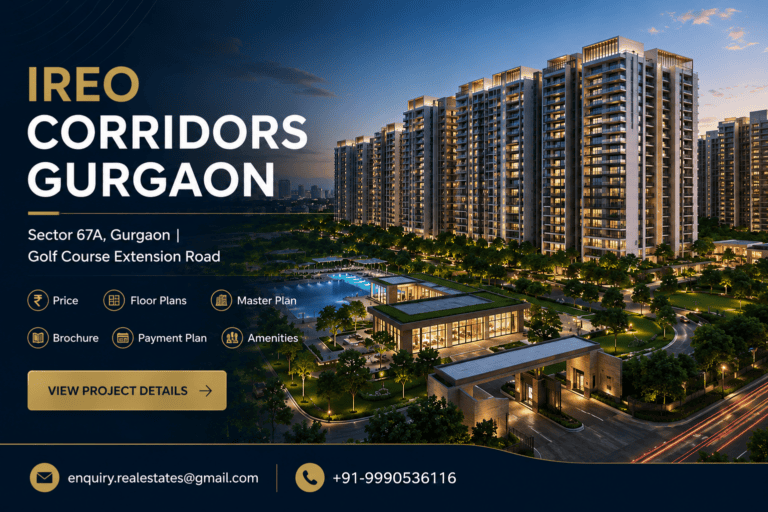
Properties managed with structured maintenance frameworks, such as Ireo Corridors, demonstrate how transparent billing models prevent budget shortfalls while sustaining high-end amenities over time.
2. Operational Framework, Amenities, and Utility Management
The daily living experience within a gated community relies heavily on robust utility infrastructure and proactive facility maintenance schedules.
Water Supply Reliability and Harvesting Systems
Water scarcity is a major issue in urban developments. Buyers must ask:
- What is the primary source of water supply (Municipal connection, borewells, or private water tankers)?
- If dependent on water tankers, what is the monthly expenditure, and how is it factored into the maintenance budget?
- Does the society possess an operational Sewage Treatment Plant (STP) for treating wastewater to irrigate gardens and flush toilets?
- Are rainwater harvesting pits actively maintained and desilted before the monsoon season?
Power Backup, Grid Capacity, and Renewable Energy Integration
Uninterrupted power supply is essential for high-rise living. Verify whether the society offers 100% power backup including air conditioning loads or if it only covers basic lighting and fan points. Ask about:
- Diesel Generator (DG) auto-switchover times and individual unit DG metering systems.
- Dual-metering technology that tracks grid consumption versus backup generator usage separately.
- On-site solar panels installed in common areas to reduce grid reliance and lower monthly common-area electricity bills.
Development standards seen in projects like IREO Victory Valley illustrate the importance of high-capacity dual-metering power backups and efficient water treatment infrastructure in high-density vertical living environments.
3. Governance Structure: RWA vs. Builder Management Transition
Understanding who controls society operations and how decisions are made is crucial for long-term governance.
The Builder Handover Phase and Maintenance Handover
If buying in a newly completed or under-construction project, ask about the transition timeline from the developer to the Resident Welfare Association (RWA) or Apartment Owners Association (AOA). Key transition checkpoints include:
- Is the handover complete, or is the developer managing operations via an interim facility management agency?
- Has the developer transferred the complete Sinking Fund corpus to the elected RWA?
- Have key structural warranty documents, building layout approvals, and equipment operational manuals been officially handed over?
RWA Election Cadence and Dispute Resolution Mechanisms
A functional RWA should hold transparent annual general meetings (AGMs), conduct fair elections per local apartment ownership acts, and maintain open communication with residents. Inquire whether:
- The society uses a digital community app for complaint ticketing, visitor approvals, and financial polling.
- There is a clear grievance escalation matrix with defined response times for plumbing, electrical, or administrative complaints.
- Bye-laws are modern, fair, and legally compliant, balancing owner rights with tenant guidelines.
4. Security Protocols, Smart Tech, and Digital Governance
Modern society management relies on integrated digital security and tech-driven administrative software.
Physical Security Guard Deployment and Access Control
Security involves more than just a guard at the main entrance. Ask about access protocols:
- Is there a 24/7 security team monitoring access points, basements, and common amenities?
- Are Boom Barriers integrated with RFID tags or Automatic Number Plate Recognition (ANPR) systems for resident vehicles?
- How are external delivery personnel, domestic staff, and visitors verified before entering residential towers?
Surveillance Network and Smart Society Platforms
A robust surveillance network deters safety risks and resolves community disputes. Check if:
- CCTV coverage spans perimeter walls, elevator interiors, basement corridors, and children’s play zones with adequate data backup retention.
- The society utilizes digital management platforms (e.g., MyGate, NoBrokerHood) to track entry logs, digitize gate passes, and process digital payments.
Luxury residential towers like IREO Grand Arch feature centralized command systems and integrated security protocols, setting a strong benchmark for modern gated community management.
5. Legal Compliance, Occupancy Certificates, and Structural Audits
Administrative excellence is meaningless without complete legal compliance and structural integrity.
Essential Regulatory Clearances and Certificates
Never purchase a flat without verifying that the management holds and maintains these statutory documents:
Structural Audits and Building Maintenance History
For properties older than 5 to 10 years, ask if the RWA has conducted structural stability audits by certified engineers. Inquire about:
- History of exterior wall seepage, basement flooding, or foundation waterproofing treatments.
- Maintenance and replacement schedules for main water supply pipes and drainage lines.
- Facade maintenance routines, including safety inspections for glass balconies or high-rise exterior cladding.
6. Parking Allocation, Commercial Integration, and Serviced Living
Parking conflicts and mixed-use management issues can directly impact your daily living experience.
Parking Slot Allotment and EV Infrastructure
Parking disputes are a common issue in modern residential societies. Clarify the following before closing a transaction:
- Is your parking space legally assigned, covered, and listed in your sale deed, or is it unreserved open parking managed on a first-come basis?
- Are there designated visitor parking bays to prevent illegal parking in driveway lanes?
- Has the society installed Electric Vehicle (EV) charging stations or established policies allowing owners to install private charging units in basement slots?
Hospitality-Grade Maintenance and Serviced Residences
For buyers looking at luxury serviced apartments or mixed-use developments, management expectations extend far beyond standard housekeeping.
- Are concierge desks, valet assistance, and centralized laundry services managed by an external hospitality management firm?
- How are short-term leasing policies managed to protect resident privacy while allowing investment flexibility?
Investments in serviced concepts like Ireo Ascott Gurgaon highlight how professional facility management teams maintain five-star operational standards for high-yield residential assets.
Data Insights & Market Trends in Property Management
Recent real estate industry surveys highlight how management efficiency impacts property appreciation, rental returns, and resident satisfaction:
- Property Value Retention: Residential units in well-managed societies command a 12% to 18% price premium in resale markets compared to similar properties with poor maintenance and weak RWAs.
- Smart Security Adoption: Over 78% of urban flat buyers consider digital gate management apps and complete CCTV coverage mandatory requirements when evaluating a home.
- Sustainability & Eco-Features: Communities with operational rainwater harvesting, active solar power setups, and integrated STPs record an average 22% reduction in common maintenance overheads.
- EV Charging Demand:64% of luxury homebuyers actively ask about EV charging infrastructure and electrical load capacity before finalizing property purchases.
- Rental Yield Impact: Serviced units with professional facility management agencies yield up to 25% higher rental returns due to superior upkeep and tenant retention.
Future Trends in Residential Governance
As technology advances and sustainability becomes essential, society management is evolving rapidly:
- Inspect Financial Statements: Always review the last 3 years of audited accounts, checking the sinking fund balance and default rates before buying.
- Audit Core Utilities: Verify water sources, STP operations, dual-metering power backups, and rainwater harvesting setup.
- Review Legal Compliance: Confirm the presence of an Occupancy Certificate (OC), valid Fire NOC, and lift safety certificates.
- Assess Security & Governance: Choose societies with tech-enabled gate security, complete CCTV coverage, and an active, transparent RWA.
- Confirm Parking Allocations: Ensure your parking slot is explicitly deeded, covered, and equipped for future EV charging needs.
Frequently Asked Questions
What is the most important financial document to check in a residential society before buying a flat?
The audited annual financial report for the past 3 years is most critical. It reveals the society’s income, operating costs, debt status, and sinking fund reserves.
Why is the sinking fund so critical when evaluating society management?
The sinking fund acts as a financial reserve for major structural repairs, facade repainting, and emergency equipment replacements. A healthy sinking fund protects unit owners from sudden, high ad-hoc charges.
What is the difference between builder-managed maintenance and RWA management?
Builder management occurs right after project completion, where the developer or their hired facility team handles operations. RWA management begins after the formal handover, giving elected property owners control over budgets, vendors, and society rules.
How do I check if a residential society has an Occupancy Certificate (OC)?
Request a certified copy of the Occupancy Certificate directly from the seller, developer, or RWA office. You can also verify its validity with local municipal planning authorities.
What happens if a society does not have a functional Sewage Treatment Plant (STP)?
Without an operational STP, the society relies completely on external freshwater for flushing and landscaping. This significantly increases monthly utility bills and can lead to environmental penalties from local authorities.
How does dual metering work for power backup in gated communities?
Dual metering uses smart utility meters to track municipal grid power and backup generator electricity separately. Because generator power is more expensive, dual meters ensure residents are billed accurately based on their actual backup usage.
Are parking spaces legally included with the flat purchase?
Parking spaces must be explicitly defined and allocated in your allotment letter or sale deed. Clarify whether your slot is covered basement parking or open surface parking before completing the purchase.
Can an RWA arbitrarily increase monthly maintenance fees?
No, an RWA cannot raise maintenance fees arbitrarily. Any fee revision must be presented, discussed, and voted on by property owners during an Annual General Meeting (AGM) or Extraordinary General Meeting (EGM) as outlined in the society’s bye-laws.
What digital tools should a well-managed residential society use today?
Modern societies typically use community software for gate access verification, visitor logs, online maintenance bill payments, complaint ticketing, and digital polls for community decisions.
How does strong society management impact resale and rental value?
Efficient management keeps building infrastructure in top condition, protects structural health, ensures steady utility access, and maintains strong security. This directly raises property values, attracts quality tenants, and supports higher resale prices.
Final Thoughts
Buying an apartment is one of the most significant financial investments you will make. While architectural design, prime locations, and high-end interiors are essential, long-term living comfort depends on Residential Society Management.
By asking detailed questions about financial reserves, maintenance breakdowns, utility sources, security tech, legal compliance, and governance frameworks, you protect your capital and secure a seamless living experience. Make sure to perform thorough operational due diligence before signing your property agreement—your future peace of mind depends on it.