How Infrastructure Development Can Impact Gurgaon Property Prices
The evolution of National Capital Region (NCR) real estate is driven by public transit infrastructure, master-planned road networks, and rapid urban development. Understanding how mega-infrastructure projects influence Gurgaon Property Prices requires evaluating transit corridors, commercial expansions, and civic utility upgrades. As major bypasses, elevated expressways, and mass transit corridors open across Millennium City, evaluating options like an Ireo New Project Gurgaon or an Ireo New Project provides helpful context on how master-planned townships benefit from regional infrastructure growth.
How Infrastructure Development Can Impact Gurgaon Property Prices
Core Infrastructure Drivers Shaping Real Estate Valuation
Urban infrastructure acts as the single primary catalyst for land appreciation and property value growth across rapidly expanding metropolitan markets. When municipal authorities and central planning bodies approve, fund, and construct transit lines, elevated expressways, and civic utilities, nearby land shifts from speculative agricultural or low-density holdings into high-yield commercial and residential hubs.
In Gurgaon, property value trends closely match the delivery timeline of major infrastructure projects. Reduced travel times, direct airport links, and expanded metro access increase buyer interest, raise rental yields, and drive multi-year capital growth.
Furthermore, civic infrastructure upgrades such as underground utility trenches, stormwater management systems, and smart grid electricity distribution—help properties maintain their market value over multi-year holding periods.
In-Depth Analysis of Major Infrastructure Corridors
Dwarka Expressway (Northern Peripheral Road)
The completion of the 29-kilometer, 8-lane elevated Dwarka Expressway represents a significant transformation for northern Gurgaon real estate. Built as an alternate bypass connecting West Delhi directly to NH-48 at Kherki Daula, this corridor has converted nearby farmland into a primary luxury housing market.
Before the expressway opened, residential land prices along Sectors 102 through 113 reflected construction delays and limited road access. Following the opening of the elevated highway sections and the urban tunnel link to IGI Airport Terminal 3, property valuations saw steady price gains.
- Airport Transit Link: Commute times to IGI Airport dropped from over 50 minutes to under 20 minutes for northern sector residents.
- Commercial Synergy: Proximity to the Yashobhoomi Convention Center in Dwarka Sector 25 and Diplomatic Enclave II continues to drive institutional real estate investment.
- Smart Urban Layouts: Sectors along this expressway feature wider internal sector roads, dedicated utility belts, and high-density residential planning.
Golf Course Road & Rapid Metro Network
Golf Course Road serves as an example of how transit infrastructure transforms an urban corridor into a high-value real estate hub. The expansion of Golf Course Road into a 16-lane signal-free corridor, combined with the private Rapid Metro line, turned this area into Gurgaon’s main luxury residential and commercial center.
Iconic residential developments such as IREO Victory Valley in Sector 67 demonstrate how modern architectural engineering along core connectivity corridors retains high corporate rental appeal and steady long-term market value.
Southern Peripheral Road (SPR) & Cloverleaf Junction
Southern Peripheral Road acts as a crucial connecting artery joining Golf Course Extension Road, NH-48, and the Central Peripheral Road (CPR). The completion of the major cloverleaf interchange near Kherki Daula removed major transit bottlenecks, directly improving property access across Sectors 68 through 75.
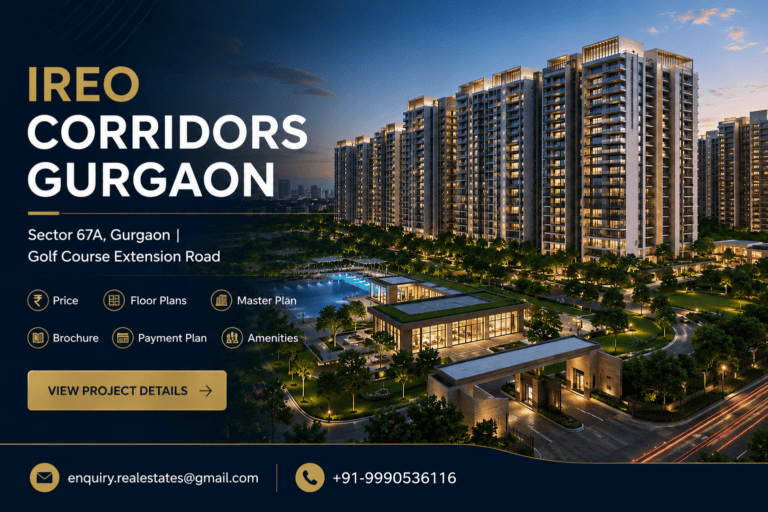
Gated township developments like Ireo Corridors in Sector 67A illustrate how master-planned communities benefit from regional highway access, offering residents convenient commutes to major corporate parks while giving property owners exposure to capital growth.
Golf Course Extension Road Corridor
Extending south from Golf Course Road, this micro-market expanded rapidly as broad arterial roads, underpasses, and commercial office parks connected the corridor directly to Cyber City and Sohna Road.
Established communities like IREO Grand Arch in Sector 58 demonstrate how master-planned residential layouts along major corporate transit corridors maintain high tenant demand, steady rental yields, and long-term capital appreciation.
Stages of Infrastructure Impact on Property Values
Property appreciation resulting from major infrastructure projects typically unfolds across three distinct stages:
Stage 1: Announcement and Land Acquisition (Speculative Phase)
- Characteristics: Initial government announcements, master plan filings, and land acquisition notifications create early speculative interest.
- Price Movement: Land and residential unit prices experience an initial price increase (15% to 30%) as investors enter early.
- Risk Level: Elevated risk due to potential regulatory delays, land acquisition disputes, and funding revisions.
Stage 2: Active Construction and Engineering Progress (Gestational Phase)
- Characteristics: Heavy machinery, earth-moving operations, flyover construction, and utility laying begin along the designated transit alignment.
- Price Movement: Prices often stabilize or grow modestly (5% to 10% annually) as early buyers wait through construction disruptions and temporary traffic bottlenecks.
- Risk Level: Moderate risk tied directly to developer execution timelines and municipal utility synchronization.
Stage 3: Project Completion and Operational Opening (Realization Phase)
- Characteristics: Physical ribbons are cut, public transit services begin, expressway lanes open to traffic, and daily commute times drop immediately.
- Price Movement: A sharp increase in capital values and rental rates (25% to 50%+) as end-user home buyers, corporate tenants, and institutional funds compete for finished units.
- Risk Level: Low operational risk; market pricing shifts to rely on rental yields, occupancy rates, and overall economic conditions.
Evaluating Financial Metrics & Asset Value Gains
Analyzing property market performance requires evaluating both capital appreciation during infrastructure development and long-term rental income once projects are operational.
Impact on Rental Yields vs. Capital Gains
While large infrastructure additions drive rapid capital appreciation during their planning and construction phases, rental yields often adjust once projects become fully operational.
In expanding transit corridors such as the Central Peripheral Road (CPR), initial rental yields may start between 2.5% and 3.2%. However, as nearby commercial centers, retail complexes, and schools open, rental rates increase, bringing net rental yields closer to city averages (3.5% to 4.5%).
Five-Year Financial Impact Scenario
Consider an investor acquiring a 3-BHK luxury apartment along an emerging infrastructure corridor like SPR for an all-inclusive cost of 2.15 Crore.
- Year 1 Purchase Value: 2.15 Crore (During active cloverleaf & road upgrade construction)
- Year 1 Gross Annual Rent: 6.60 Lakhs (55,000 per month)
- Year 1 Gross Rental Yield: 3.07%
- Year 3 Event: Cloverleaf interchange and arterial road widening open to traffic.
- Year 5 Resale Market Value: 3.80 Crore (Reflecting a ~12.1% compound annual appreciation rate)
- Year 5 Monthly Rental Income: 1,05,000 per month (4.00 Lakhs annual rental growth)
- Total Realized Capital Appreciation: 1.65 Crore
This financial progression shows how public infrastructure delivery accelerates both underlying land values and long-term rental earnings.
Comparative Evaluation of Infrastructure-Driven Asset Classes
High-Rise Townships vs. Builder Floors
Large master-planned townships benefit significantly from major infrastructure upgrades. Gated communities with wide internal access roads, dedicated power backup systems, and private clubhouses retain tenant appeal and experience faster price recovery during market slowdowns.
Independent builder floors on smaller sector plots offer direct land ownership share. While they may see fast short-term price adjustments after nearby road openings, they lack the comprehensive security, facilities, and facility management services that high-net-worth tenants look for in premium markets.
Managed Hospitality & Serviced Suites
Hospitality-focused real estate assets near major corporate parks and expressways deliver higher gross rental returns (5.5% to 7.0%). Serviced suite projects like Ireo Ascott Gurgaon in Sector 59 serve business executives, corporate travelers, and long-term international guests. They offer turn-key rental operations that benefit directly from nearby transit links and corporate office expansions.
Legal and Regulatory Due Diligence in Growth Belts
Investing in infrastructure-led growth sectors requires thorough regulatory checks to verify project approvals and delivery timelines.
HRERA Verification Standard Procedures
- Project Registration Check: Confirm the development holds an active Haryana Real Estate Regulatory Authority (HRERA) registration number on the state portal.
- Infrastructure Alignment Review: Cross-check government master plans to confirm proposed metro routes, road widenings, or high-tension power lines do not conflict with project boundaries.
- Escrow Account Verification: Ensure the developer deposits 70% of buyer collections into designated project escrow accounts used exclusively for construction expenses.
Land Title and Sector Utility Checks
Verify that the promoter holds unencumbered ownership of the project land. Request and inspect the official Conversion of Land Use (CLU) certificate granted by the Department of Town and Country Planning (DTCP) Haryana to confirm residential land rights and check municipal sewer, water, and power connection schedules.
Real-World Case Studies across Micro-Markets
Scenario A: Highway Delivery Impact (Dwarka Expressway)
- Location: Sector 106, Northern Peripheral Road
- Entry Purchase Price (2020): 1.25 Crore
- Market Value (2025): 2.85 Crore
- Capital Growth: 128% total capital expansion
- Primary Factor: Completion of the elevated expressway section, opening of the airport tunnel link, and rising demand for airport-adjacent housing.
Scenario B: Metro Link Impact (Golf Course Road)
- Location: Sector 54, Golf Course Road Corridor
- Entry Purchase Price (2018): 2.80 Crore
- Market Value (2025): 5.90 Crore
- Monthly Rental Income (2025): 1,40,000 per month
- Primary Factor: Integration of the signal-free road network, Rapid Metro access, and expanding Grade-A commercial office parks.
Scenario C: Cloverleaf Interconnect Impact (SPR Belt)
- Location: Sector 67A, Southern Peripheral Road
- Entry Purchase Price (2020): 1.65 Crore
- Market Value (2025): 3.05 Crore
- Overall Return Profile: Balanced growth combining steady monthly rental income with capital appreciation driven by new highway connections.
Market Statistics & Trends
Recent real estate performance figures show the strong influence of infrastructure completions on local property values:
- Average Capital Growth Rates: Gated residential developments near major transit projects recorded average annual price appreciation between 13.2% and 17.5% over recent years.
- Rental Value Adjustments: Average residential rents across prime sectors rose substantially due to corporate return-to-office policies and better transit access to office hubs.
- Yield Variances: Grade-A commercial office properties yield between 7.4% and 9.1%, while luxury residential apartments range from 3.2% to 4.8%.
Future Real Estate Outlook
Transit-Oriented Master Developments (TOD)
Future urban development in Gurgaon will increasingly focus on Transit-Oriented Developments. Residential properties located within walking distance of proposed Rapid Metro line extensions, regional rapid transit system (RRTS) stations, and major highway interchanges will command rental premiums and offer higher resale liquidity.
Smart Civic Utilities & Green Energy Integration
Modern urban buyers expect eco-friendly infrastructure, including rainwater harvesting systems, solar energy integrations, waste recycling, and EV charging stations. Modern developments that lower ongoing utility expenses attract corporate tenants and hold asset value better over long holding periods.
- Time Investments with Infrastructure Stages: Capitalize on price growth by entering micro-markets during early construction phases rather than waiting for project completion.
- Prioritize Transit Connections: Invest in sectors with direct access to elevated expressways, cloverleaf interchanges, and planned metro lines.
- Verify HRERA & Master Plans: Check HRERA filings, land clearings, and municipal plans to avoid projects with construction or land conflicts.
- Focus on Integrated Townships: Gated high-rise complexes offer higher security, integrated facilities, strong tenant demand, and better resale liquidity compared to isolated projects.
- Calculate True Net Returns: Factor in maintenance fees, property taxes, initial fitting costs, and vacancy periods when calculating overall property returns.
Frequently Asked Questions
How does new infrastructure affect property prices in Gurgaon?
New infrastructure lowers commute times, improves regional connectivity, and attracts commercial investments. These factors drive tenant demand, increase rental yields, and accelerate long-term capital appreciation for nearby properties.
Which Gurgaon infrastructure projects have had the biggest impact on real estate prices?
The Dwarka Expressway, Golf Course Road signal-free corridor, Rapid Metro expansion, and Central Peripheral Road cloverleaf interchange have been major drivers of real estate growth in the city.
What is the typical property price increase when an expressway or metro line opens?
Property prices often appreciate by 15% to 30% during the initial project announcement phase, followed by an additional 25% to 50%+ gain once the infrastructure project opens to the public.
How does proximity to a metro station impact residential rental yields?
Properties located within a 1 to 2-kilometer radius of operational metro stations command 15% to 25% higher rental rates and experience lower vacancy rates compared to transit-isolated properties.
Is it better to invest in an infrastructure corridor during construction or after completion?
Investing during the construction phase offers lower entry prices and higher capital appreciation potential, though it carries execution delay risks. Purchasing post-completion offers immediate rental returns and lower project risk.
How does the Dwarka Expressway impact airport travel times for Gurgaon residents?
The elevated expressway and urban tunnel link reduce travel times to IGI Airport Terminal 3 to under 20 minutes from most northern Gurgaon sectors.
What role does civic infrastructure play in long-term property values?
Civic infrastructure—such as underground power lines, stormwater drainage systems, and green belts prevents waterlogging and municipal disruption, helping properties retain higher long-term market values.
How do highway cloverleaf interchanges affect nearby residential sectors?
Cloverleaf interchanges improve local connectivity between major expressways, eliminating traffic bottlenecks and making nearby sectors more accessible for daily commuters.
What impact does HRERA have on infrastructure-linked real estate projects?
HRERA ensures developers adhere to approved floor plans, manage project funds through escrow accounts, and complete construction on schedule, reducing investment risk for buyers.
Are commercial properties more sensitive to infrastructure development than residential properties?
Yes, commercial property values and tenant occupancies rely heavily on transit access and employee commute convenience, making them responsive to major infrastructure completions.
Final Thoughts
Building a successful real estate portfolio in Gurgaon requires understanding how major infrastructure projects drive long-term property growth. Investors seeking stable rental income will find reliable returns along established transit corridors like Golf Course Road and Golf Course Extension Road. Meanwhile, those focused on multi-year equity growth can capitalize on expanding infrastructure belts along Dwarka Expressway and Southern Peripheral Road.
By verifying HRERA compliance, tracking public infrastructure schedules, evaluating true net yields, and selecting well-managed gated townships, investors can position themselves for predictable returns and long-term capital growth across Gurgaon’s real estate market.